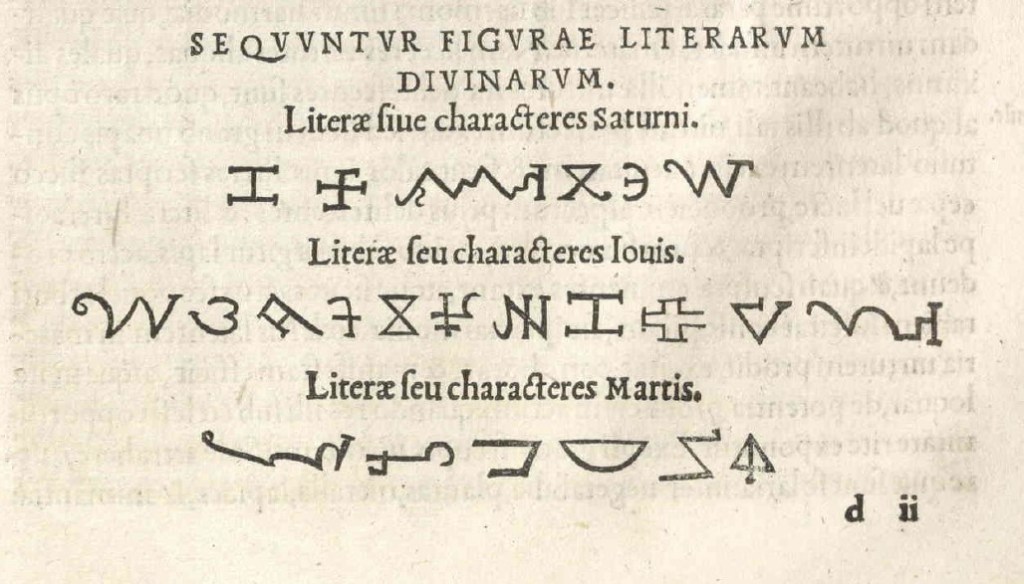
The De occulta philosophia was a project developed over more than twenty years. It began as a manuscript compendium intended for a small circle of learned readers, was repeatedly revised during Agrippa’s travels through Germany, Italy, France and the Low Countries, and was eventually published in a climate marked by theological suspicion, civic censorship and religious conflict. Its editorial history is therefore an essential part of the work itself.
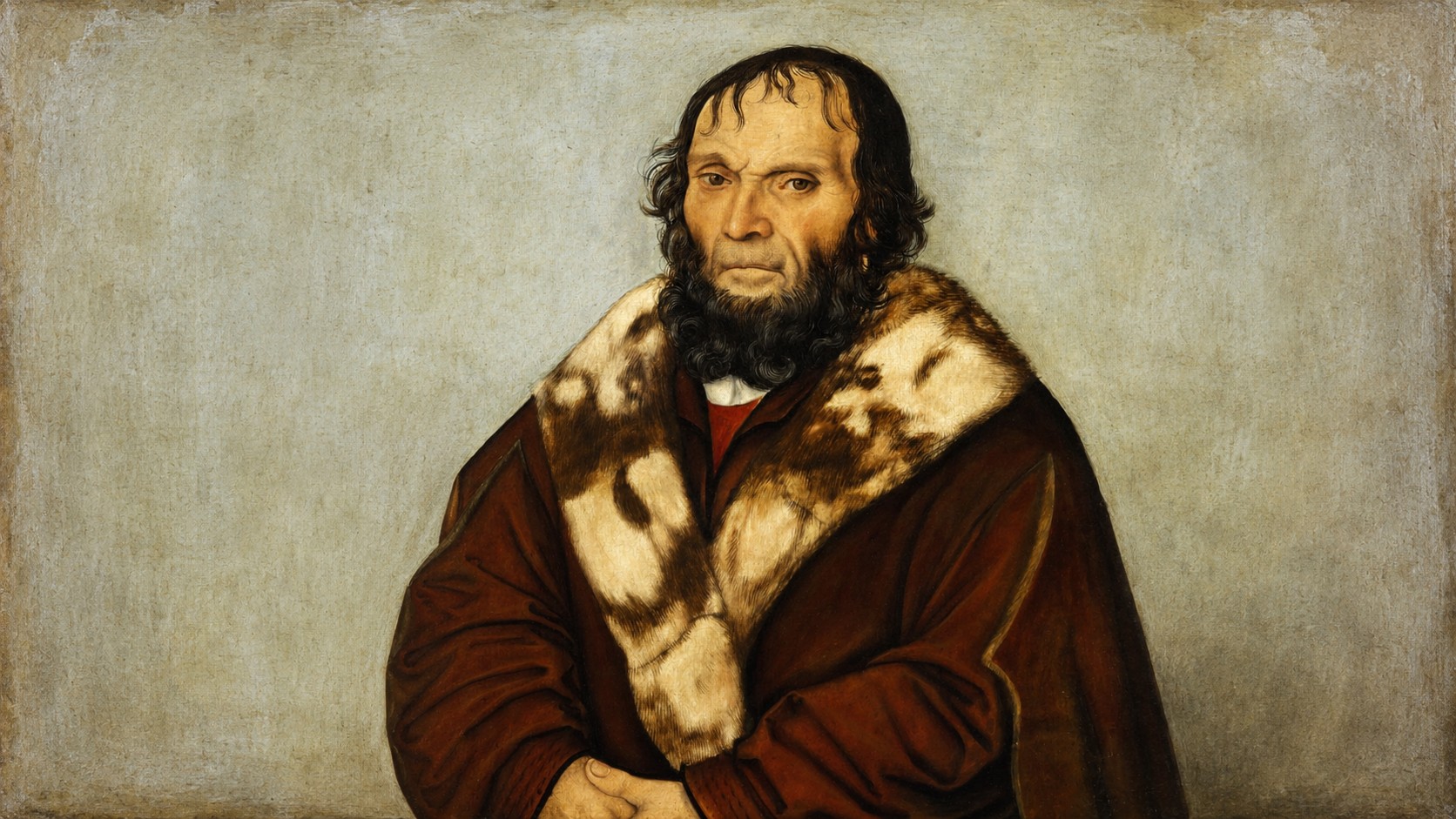
Agrippa came from the academic environment of Cologne, where he encountered the traditions of Albertus Magnus, Pliny and medieval natural philosophy. In 1509, he was invited to deliver a course at Dôle on Johannes Reuchlin’s De verbo mirifico, a fundamental work of Renaissance Christian Kabbalah that sought to reconcile Jewish, Neoplatonic and Christian elements.
Some interpreted Agrippa’s lectures as the dissemination of a suspicious discipline. The Franciscan Jean Catilinet publicly denounced him as a “Judaizing heretic.” The accusation brought Agrippa’s academic experience at Dôle to an end and demonstrates that, even before the publication of the De occulta philosophia, he was already associated with a form of knowledge perceived as theologically ambiguous.
The 1510 Manuscript and Johannes Trithemius
In the winter of 1509–1510, Agrippa travelled to Würzburg, where he met Johannes Trithemius, abbot of Sponheim, a renowned humanist, historian and author of works on cryptography, artificial memory and spirits.
The two men discussed natural magic and its function within contemporary culture. Shortly afterwards, Agrippa completed the first nucleus of his treatise and dedicated it to Trithemius. The presentation manuscript was delivered shortly before 8 April 1510.
The dedicatory copy is still preserved at the Universitätsbibliothek Würzburg under the shelf mark M.ch.q.50. This first version circulated in manuscript form and was not conceived as a book intended for the general public. This was consistent with the Renaissance belief that certain forms of knowledge should be communicated cautiously and reserved for readers capable of understanding their religious and philosophical limits.
Agrippa did not present magic as a collection of facts or superstitious beliefs. His intention was to restore an ancient, philosophical and religious form of magic, freeing it from the distortions caused by ignorance and demonic practices.
For Agrippa, magic was the “perfection of the noblest philosophy”: a synthetic science capable of establishing relationships between nature, the heavens, the soul and God.
The three-book structure reflects a hierarchical cosmology:
Book I: the elemental and sublunary world — stones, plants, animals, medicines, manifest and occult qualities, natural sympathies and antipathies.
Book II: the celestial world — astrology, planets, zodiacal signs, astral images, numbers, harmonies and stellar influences.
Book III: the intellectual and religious world — angels, divine names, Christian Kabbalah, prayers, ceremonies and the spiritual perfection of the magician.
The theoretical core of the work emerged from an extensive process of synthesis involving Pliny, Albertus Magnus, Marsilio Ficino, Giovanni Pico della Mirandola, Johannes Reuchlin, Hermetic writings, Neoplatonism, Christian Kabbalah, and the medieval traditions of natural and astral magic.
Italy and the Revision of the Work
Between 1511 and 1518, Agrippa lived in various Italian cities, especially Pavia and Turin, and in the Monferrato region. There he entered networks of humanists that enabled him to deepen his knowledge of Neoplatonism, Hermeticism, Kabbalah and the new works circulating during the early sixteenth century.
In the final version of the De occulta philosophia, Agrippa incorporated materials that he either did not possess or had not yet used in 1510. These included Ficino’s commentaries on Plato and Plotinus, works by Pico, Lodovico Lazzarelli’s Crater Hermetis, Reuchlin’s De arte cabalistica, the writings of Paolo Riccio and Francesco Giorgi Veneto’s De harmonia mundi.
The principal interpretative difficulty arises from the fact that, in 1530, Agrippa published the De incertitudine et vanitate scientiarum et artium, an extremely severe criticism of the sciences, academic schools, astrologers, jurists, physicians and practitioners of the occult arts themselves.
For a long time, this text was interpreted as a recantation of the De occulta philosophia. The issue, however, is more complex.
Agrippa continued to revise and seek publication for his magical treatise precisely during the years in which he was working on the De vanitate. Moreover, he publicly defended both works against the theologians of Leuven and against other opponents.
The most convincing interpretation is that Agrippa did not reject all occult knowledge. Instead, he attacked the arrogant, mechanical, superstitious and morally corrupt use of knowledge. The true problem was not science in itself, but the human being who claimed to possess it without piety, inner discipline and submission to God.
The First Printing of 1531
In 1531, Johannes Grapheus printed an expanded version of the first book of the De occulta philosophia in Antwerp. The work was dedicated to Hermann von Wied, Archbishop-Elector of Cologne. A Parisian edition of the Liber primus was also published by Christian Wechel.
This partial publication is important because it demonstrates that Agrippa was already attempting to introduce the work into the European book market.
In 1532, Agrippa entered the service of Hermann von Wied, who offered him protection. The complete text was entrusted to the printer Johannes Soter in Cologne, and by November of that year its typographical composition was already under way.
Shortly before Christmas, the Dominican Conrad Köllin denounced the book as heretical and blasphemous. The city senate suspended the printing process.
Agrippa then addressed a forceful petition to the Cologne authorities, but the dispute was resolved primarily through the intervention of Hermann von Wied.
The complete edition was finally published in 1533, probably without explicitly indicating either the printer’s name or the place of publication, although bibliographical scholarship attributes it to Soter and Cologne.
It is significant that the title page nevertheless retained a reference to an imperial privilege intended to protect the publication economically. Such protection, however, was not sufficient to neutralise religious and civic censorship.
The complete 1533 edition was accompanied by an appendix containing passages from the De vanitate in which Agrippa criticised the magical arts. Within the context of censorship, this appendix appears to have functioned as a form of caution, doctrinal delimitation and preventive defence against accusations of promoting superstition or demonolatry.
Here the ambiguous, but also strikingly modern, character of the work becomes evident. Agrippa disseminated an enormous quantity of occult material while simultaneously maintaining that its legitimate use required moral purification, authentic religious devotion and the ability to distinguish philosophical magic from superstition.
Later Reception and the Spurious “Fourth Book”
The De occulta philosophia continued to circulate and was translated into English in 1651. It became a decisive source for modern European esotericism, but its reputation was altered by its association with later texts that were more openly operational and demonological.
Particularly important is the so-called Liber quartus de occulta philosophia, printed after Agrippa’s death and presented as a fourth book of his work.
It does not belong to the three authentic books published in 1533 and is generally considered pseudo-Agrippan. Its fame contributed to establishing the popular image of Agrippa as a conjurer of demons or the author of a practical grimoire.
Agrippa’s principal works were also subsequently included in the Leuven indexes of prohibited books, confirming that the controversy did not end with the publication of the complete edition in 1533.
Agrippa’s Death
Cornelius Agrippa died in Grenoble, France, traditionally on 18 February 1535. A recent encyclopaedic source records this precise date, although more cautious biographical reconstructions point out that direct documentation is scarce and place his death in 1535, or no later than 1536.
Shortly before his death, Agrippa had returned to France and had been arrested by order of Francis I, probably within the context of his political and religious controversies and the disputes provoked by his writings.
He was released and died shortly afterwards in Grenoble.
The physical cause of his death is unknown. There are no reliable sources that would justify speaking of execution, poisoning, suicide or a “mysterious” death.
Agrippa was most likely buried in Grenoble, in the church or complex of the Dominicans, also known as the Jacobins or Friars Preachers. The most serious biographical tradition places his death in Grenoble in 1535 and reports that, after falling ill, he was buried in the local Dominican church.
No identifiable tomb, surviving inscription or securely visitable burial place is currently known.
The medieval Dominican convent of Grenoble, founded in 1288, occupied a large area of what is now the city centre, between Place Grenette, rue de la République and the area of the present-day Lycée Stendhal. The original church and convent were destroyed in 1562 during the French Wars of Religion. The area was later rebuilt and transformed.
The Legend of the Black Dog and Agrippa’s Death
According to Paolo Giovio, the Italian humanist and historian who published a hostile elogium of Agrippa in 1546, Agrippa did not die in Grenoble but in Lyon, “in a dark and miserable inn.”
Many people, Giovio claimed, had cursed Agrippa because he was suspected of practising necromancy and because he was accompanied by a cacodaemon—an evil demon—in the form of a black dog.
Giovio’s account is as follows.
Sensing that death was near and being urged to repent, Agrippa supposedly removed from the dog a leather collar adorned with nails arranged like magical signs and cried:
Abi perdita bestia, quae me totum perdidisti.
“Begone, accursed beast, you who have utterly ruined me.”
The dog, described as Agrippa’s familiar spirit and companion on all his journeys, then allegedly fled to the Arar—the Latin name of the Saône—and threw itself into the river, never to emerge again.
It is important to note that, in the original source, the river is therefore the Saône near Lyon. Versions that mention the Rhône, Grenoble or other locations are later elaborations or the result of geographical confusion.
Johann Weyer, a former student of Agrippa, explicitly attacked the legend in his De praestigiis daemonum of 1563, describing it as an unfounded popular rumour.
Weyer stated that he had personally known the dog. It was black, medium-sized and called Monsieur. He even recalled that, while studying under Agrippa, he had often led it on a leash himself.
Weyer also reported that Agrippa was extremely fond of the animal. He allowed it to remain beside him, eat near the table and sleep on his bed.
Such behaviour, in the case of a man already famous as the author of the De occulta philosophia, could easily appear suspicious and was maliciously interpreted as evidence of familiarity with a demon.
The story of the black dog subsequently entered the broader European repertoire of demonological narratives. It is very likely that the motif passed from the legend of Agrippa into the Faust tradition, rather than the other way around.
In 1548, Johannes Gast attributed a demonic dog and horse to Faust. Centuries later, Goethe transformed the motif into the celebrated black poodle that follows Faust and reveals itself to be Mephistopheles.
The popular image of Agrippa—the accursed necromancer, abandoned by his own demon and accompanied by an infernal dog—was therefore primarily the result of a posthumous accumulation of theological hostility, humanist satire and demonological literature.
Bibliography
Primary Sources
AGRIPPA VON NETTESHEIM, Heinrich Cornelius, De occulta philosophia libri tres, critical edition edited by Vittoria Perrone Compagni, Leiden–New York–Köln, E. J. Brill, 1992 (Studies in the History of Christian Thought, 48).
AGRIPPA VON NETTESHEIM, Heinrich Cornelius, De incertitudine et vanitate scientiarum et artium atque excellentia Verbi Dei declamatio, Antverpiae, Ioannes Grapheus, 1530.
GIOVIO, Paolo, Elogia virorum litteris illustrium, Basileae, Petrus Perna, 1577 [edition of the work originally published in 1546].
GIOVIO, Paolo, An Italian Portrait Gallery: Being Brief Biographies of Scholars Illustrious within the Memory of Our Grandfathers, trans. Florence Alden Gragg, Boston, Chapman & Grimes, 1935.
WEYER, Johann, De praestigiis daemonum et incantationibus ac veneficiis libri V, Basileae, Ioannes Oporinus, 1563; expanded edition in six books, Basileae, ex officina Oporiniana, 1583, II, 5.
WEYER, Johann, Witches, Devils, and Doctors in the Renaissance: Johann Weyer, De praestigiis daemonum, ed. George Mora, associate ed. Benjamin G. Kohl, trans. John Shea, Binghamton, Medieval & Renaissance Texts & Studies, 1991, II, 5, pp. 113–114.
Critical and Historiographical Studies
DE BLÉCOURT, Willem, “A Man and His Dog”, BNN Newsletter, XI, November 2017.
GURASHI, Dario, In deifico speculo. Agrippa’s Humanism, Paderborn, Brill Fink, 2021.
KEEFER, Michael H., “Agrippa’s Dilemma: Hermetic Rebirth and the Ambivalences of De vanitate and De occulta philosophia”, Renaissance Quarterly, 41/4, 1988, pp. 614–653.
LEHRICH, Christopher I., The Language of Demons and Angels: Cornelius Agrippa’s Occult Philosophy, Leiden–Boston, Brill, 2003.
NAUERT, Charles G., Jr., Agrippa and the Crisis of Renaissance Thought, Urbana, University of Illinois Press, 1965.
PERRONE COMPAGNI, Vittoria, “Dispersa intentio: Alchemy, Magic and Scepticism in Agrippa”, Early Science and Medicine, 5/2, 2000, pp. 160–177.
PERRONE COMPAGNI, Vittoria, “Astrologia e filosofia occulta in Agrippa”, Rinascimento, s. II, 41, 2001, pp. 93–111.
PERRONE COMPAGNI, Vittoria, Ermetismo e Cristianesimo in Agrippa. Il “De triplici ratione cognoscendi Deum”, Firenze, Polistampa, 2005.
PERRONE COMPAGNI, Vittoria, “Heinrich Cornelius Agrippa von Nettesheim”, in Edward N. Zalta and Uri Nodelman (eds.), The Stanford Encyclopedia of Philosophy, Summer 2025 Edition, Metaphysics Research Lab, Stanford University, 2025.
PROST, Auguste, Les sciences et les arts occultes au XVIe siècle. Corneille Agrippa, sa vie et ses œuvres, 2 vols., Paris, Champion, 1881–1882.
STRAZZONI, Andrea, “Agrippa, Heinrich Cornelius”, in Marco Sgarbi (ed.), Encyclopedia of Renaissance Philosophy, Cham, Springer, 2022, pp. 71–74, doi: 10.1007/978-3-319-14169-5_547.
VAN DER POEL, Marc, Cornelius Agrippa, the Humanist Theologian and His Declamations, Leiden–New York–Köln, Brill, 1997.
ZAMBELLI, Paola, “Magic and Radical Reformation in Agrippa of Nettesheim”, Journal of the Warburg and Courtauld Institutes, 39, 1976, pp. 69–103.
ZAMBELLI, Paola, White Magic, Black Magic in the European Renaissance: From Ficino, Pico, Della Porta to Trithemius, Agrippa, Bruno, Leiden–Boston, Brill, 2007.
ZIKA, Charles, Exorcising Our Demons: Magic, Witchcraft, and Visual Culture in Early Modern Europe, Leiden–Boston, Brill, 2003.
DE BUJANDA, Jesús Martínez, Index de l’Université de Louvain, 1546, 1550, 1558, Sherbrooke–Genève, Éditions de l’Université de Sherbrooke–Librairie Droz, 1986 (Index des livres interdits, II).



Leave a Reply