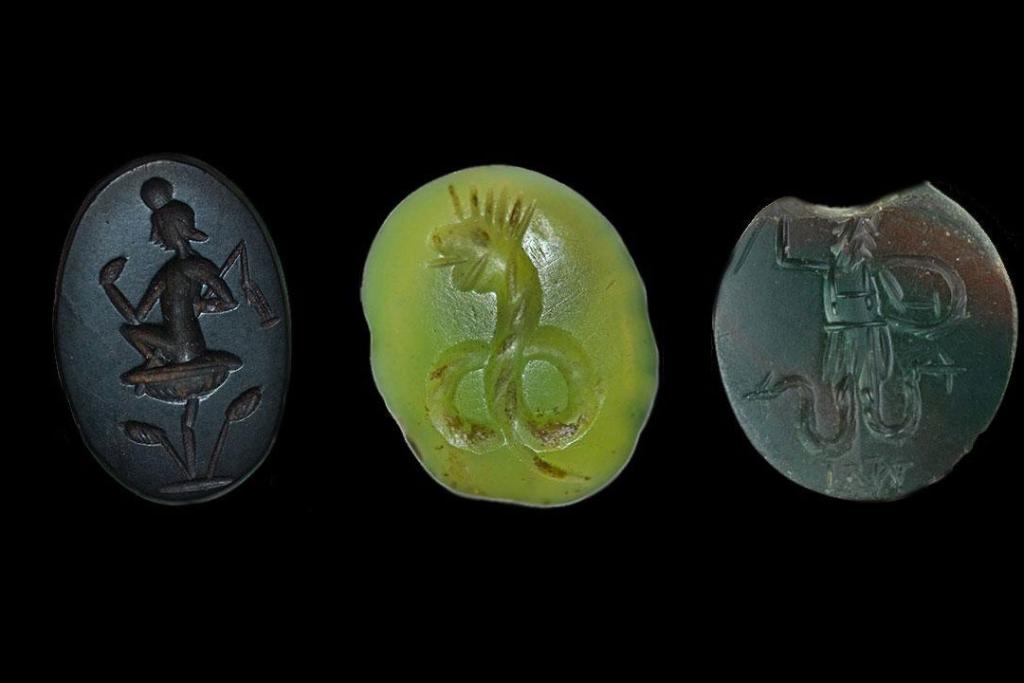
Astrological magic is one of the most complex areas in the history of astrology. In recent years, this subject has returned to the centre of renewed interest: on the one hand, there are those who still practise forms of astrological magic today, especially through elections, talismans, and planetary correspondences; on the other, there are scholars, researchers, and enthusiasts of the history of astrology who regard this subject as a cultural phenomenon of great importance, situated at the intersection of natural philosophy, religion, medicine, cosmology, ritual practice, and occult knowledge.
To begin finding our way through such a vast subject, it is essential to define the concept of “astrological magic,” which arises from the idea of a sky that is not merely the seat of signs to be interpreted, but also the seat of a complex network of influences, virtues, correspondences, and powers. According to this view, celestial qualities may be received, imitated, directed, or concentrated through images, materials, words, rituals, electional times, and precise configurations. However, in order to understand astrological magic, it is necessary to begin with the sources and their historical-critical study. The most prudent and reliable point of reference is represented by the work of historians, philologists, and academic researchers, who approach astrological magic not as a practice to be promoted or rejected, but as an object of historical enquiry. It is precisely this approach that allows the subject to be removed both from commercial simplification and from superficial condemnation, restoring it to its real historical complexity.
These are often practices situated at the boundaries between religion, natural science, philosophy, medicine, ritual practice, and occult knowledge. Sophie Page, a British historian and currently Professor of Medieval History at University College London, specialising in the social, cultural, and intellectual history of the Middle Ages, has observed that, from the Middle Ages to the present, the concept of magic has been used to designate texts, images, and objects that are difficult to place within the ordinary categories of religion or science. Richard Kieckhefer, an American historian of the Middle Ages and medieval religious culture, John Evans Professor Emeritus of Religious Studies at Northwestern University, has in turn proposed considering magic as an “aggregative” term, to be broken down into more precise practices: invocation, symbolic manipulation, the use of images, effective will, occult properties, natural correspondences, and other forms of ritual or symbolic action.
From this perspective, astrological magic is a container for ancient, medieval, and Renaissance cultures that conceived, reflected upon, and developed a relationship between heaven, nature, and human action, transforming astrology into a form of operative technology. To study astrological magic therefore means entering a borderland in which astrology also becomes a technique of time, image, and cosmic correspondence.
What Is Meant by Astrological Magic
In the historical sense, astrological magic is the attempt to operate with the heavens. The stars produce or mediate influences in the sublunary world; certain substances, images, words, sounds, colours, perfumes, metals, stones, and forms are in sympathy with specific celestial powers; the correct astrological moment makes it possible to “receive” or “fix” an astral quality in an object, an image, or a ritual action.
From this arise two possible categories.
The first is talismanic magic, based on the creation of astrological images, seals, rings, plates, engraved stones, or figures made under particular celestial configurations. The second is ritual or liturgical astral magic, in which the practitioner does not merely seek to capture a natural virtue, but addresses entities, angels, planetary spirits, celestial intelligences, or intermediate powers.
Nicolas Weill-Parot, a French historian of the Middle Ages specialising in the history of science in medieval Western Europe, made famous the distinction between a magic of images explained in more “natural” terms and an “addressative” magic, namely one directed towards a personal or spiritual recipient. Sophie Page refers precisely to this category in order to show how, during the Middle Ages, scholars assessed Arabic, Hebrew, and Christian texts differently depending on whether the operation appeared natural or directed towards invisible intelligences.
Ancient Roots: Stars, Decans, and Correspondences
Even before it is possible to speak of astrological magic in the medieval sense, there existed an ancient field composed of astral divination, cosmic religion, Egyptian decans, stars, and correspondences between macrocosm and microcosm. In Egypt, the decans were originally stellar groups or stars used to mark the time during the night; in the Hellenistic world, they later became part of astrological, medical, and magico-religious systems. In Hermetic texts, the thirty-six decans are associated with zodiacal signs, planets, parts of the body, and regions of the world: a structure that makes it possible to conceive the human body and the cosmos as communicating realities. One of the fundamental premises of astrological magic thus takes shape: what is above communicates with what is below.
In the Greco-Egyptian and Roman world, this vision became intertwined with Hermetic literature, Greek and Demotic magical papyri, Neoplatonic theurgy, and the practice of images. The so-called Magical Papyri, or Papyri Graecae Magicae, preserve formulas, hymns, invocations, and ritual practices originating from a mixed Greek, Egyptian, Jewish, and Near Eastern cultural environment; their interest in divine names, celestial powers, decans, and astral configurations shows how fluid the boundary already was between religion, astrology, magic, and private ritual practice. An example of a Magical Papyrus and its content follows.

The image depicts part of the so-called Papyrus 121, a public-domain image preserved at the British Library and also identified by scholars as P.Lond. I 121 or PGM VII. It is a genuine magical handbook, probably originating from Late Antique Egypt, in which texts of very different kinds are collected. In Papyrus 121, for example, we find two formulas for keeping insects away from the house, placed alongside the Homeromanteion, that is, an oracle based on Homeric verses. A little further on, there are indications concerning days and parts of the day favourable for divination, medical recipes, formulas against fevers, pain, coughs, and scorpion stings, as well as practices intended to obtain oracular dreams or visions. The same collection also contains more disturbing or socially aggressive texts: spells intended to induce insomnia, coercive formulas, charms for binding, restraining, or subjugating, and even a ritual described as “excellent” for silencing others.
Theurgy and Neoplatonism
Between Late Antiquity and Neoplatonism, astrological magic came close to theurgy, that is, a body of ritual practices directed not only towards the achievement of earthly effects, but also towards the elevation of the soul and contact with divine powers. Plotinus and Iamblichus represent two crucial positions: the former appears more cautious towards magical ritual, whereas Iamblichus attributes to theurgy a salvific function capable of reconnecting human beings with the divine order. The work of John F. Finamore, an American scholar of ancient philosophy and the Platonic tradition, Professor Emeritus of Classics at the University of Iowa, on Plotinus and Iamblichus shows how central the distinction between magic, religion, and theurgy is for understanding philosophical Late Antiquity.
The Arab-Islamic World
The true medieval systematisation of astrological magic passed through the Arab-Islamic world. Between the ninth and thirteenth centuries, astrology, natural philosophy, optics, cosmology, alchemy, the science of letters, and talismanic practices were elaborated within a highly sophisticated intellectual framework. Liana Saif, a historian of Islamic esotericism and medieval occult sciences, with particular attention to astrology, astral magic, natural philosophy, and the transmission of esoteric knowledge between the Islamicate world and Latin Europe, currently Assistant Professor at the Centre for the History of Hermetic Philosophy and Related Currents at the University of Amsterdam, has studied the De radiis and the Picatrix. She emphasises that, in the Islamic Middle Ages, the relationship between astrology and magic was particularly close: theories of astral influence legitimised a magic that claimed to derive its effectiveness from the dynamics of the celestial and terrestrial worlds. According to certain doctrines, everything emits rays or influences; stars and planets do not act merely as signs, but as causes or mediators of qualities. This theory makes it possible to conceive astral magic as a form of hidden natural knowledge, not necessarily as witchcraft or demonology. Liana Saif’s research also shows that, when an extraordinary phenomenon could be explained as the effect of natural yet occult forces, it could be distinguished from the demonic magic condemned by religion.
The great reference text is the Ghāyat al-Ḥakīm, known in Latin as Picatrix. It is one of the most important works of medieval astral magic, transmitted from Arabic into Latin and becoming fundamental for the magical culture of the Latin Middle Ages and the Renaissance. The Latin version was edited by David Pingree at the Warburg Institute. Picatrix is a true encyclopaedia of magical cosmology, in which electional astrology, images, materials, fumigations, spirits, planets, signs, decans, and ritual intention are integrated into a comprehensive vision of the cosmos. The modern English translation by Dan Attrell and David Porreca, based on Pingree’s textual tradition, was reviewed in Isis, a major journal in the history of science, confirming the contemporary academic interest in this material. In the opinion of the author of this article, it is the most interesting translation of the Picatrix currently available.
The Latin Middle Ages
When astral magic entered the Latin world, especially through translations from Arabic, it encountered a Christian environment that received it, studied it, but also reworked and scrutinised it. The volume The Routledge History of Medieval Magic, edited by Sophie Page and others, includes chapters devoted to astrological images, the relationship between magic and natural philosophy, magical medicine, court magic, the visual culture of magic, scholastic opposition, superstition, witchcraft, and cosmology. This already shows that the Middle Ages did not know a single idea of magic, but rather a plurality of practices and interpretations, often situated at the boundaries between natural knowledge, religion, medicine, and ritual practice. The central problem for medieval authors was determining where the effectiveness of a magical operation came from. If an astrological image, a seal, an engraved stone, or a talisman acted through a natural virtue impressed by the stars, then it could be interpreted as an instrument belonging to natural philosophy. In that case, its action did not depend on a demonic power or an illicit invocation, but on a hidden quality of nature activated at the astrologically appropriate moment. If, however, the operation involved words addressed to spirits, intelligences, demons, or personal entities, the judgement became far more severe.
From this emerged a fundamental distinction within medieval culture: on the one hand, natural magic, which could at least partially be justified through the occult properties of things, celestial correspondences, and the order of nature; on the other hand, ritual or invocative magic, often regarded as dangerous because it appeared to presuppose an explicit or implicit pact with unlawful powers. Astrological images were situated precisely in this ambiguous area. They could be presented as natural instruments, produced under specific celestial configurations, but they could also appear as ritual objects loaded with signs, names, formulas, and intentions difficult to separate from invocative practice.
Particularly important was the attempt to distinguish lawful astronomical or astrological images from necromantic or demonic images. Some authors attempted to preserve the former by maintaining that they acted through celestial virtue and the natural disposition of matter; others, more suspicious, saw in every ritual image the risk of a superstitious deviation. The boundary was subtle: a talisman prepared under a particular planetary configuration could be interpreted as a natural object, but the presence of sacred names, mysterious characters, fumigations, prayers, or invocations could quickly cause it to slip into the sphere of the illicit.
Alfonso X and Iberian Astromagical Culture
A case of enormous interest is that of the court of Alfonso X of Castile, known as the Wise. His scriptorium was one of the great centres for the transmission of astronomical, astrological, and magical culture between the Arabic, Jewish, and Christian worlds. Alejandro García Avilés, a Spanish historian of medieval art and Professor of Art History at the University of Murcia, studied two astromagical manuscripts connected with Alfonso X, including the Libro de astromagia, preserved in the Vatican Apostolic Library. The Libro de astromagia is believed to have been conceived around 1280, during the final years of the Alfonsine scriptorium. According to García Avilés, the manuscript had a complex history: after Alfonso X, it can be traced in the French environment of the late Middle Ages, then in humanist collections, and finally in the Vatican Library, where it was rediscovered for research by Aby Warburg in 1911.
The Renaissance
During the Renaissance, astrological magic experienced a new season. The central name is Marsilio Ficino, especially because of the third book of De vita, often referred to as De vita coelitus comparanda. Brian P. Copenhaver, an American historian of philosophy and Distinguished Professor Emeritus of Philosophy and History at the University of California, Los Angeles, has shown that Ficinian magic cannot simply be dismissed as irrational or primitive: it must be understood within Neoplatonic philosophy, especially through Plotinus, Proclus, the theory of cosmic sympathy, and the mediation of spiritus. Ficino sought to place astral magic within a “natural” and medico-philosophical framework. The problem was not so much the evocation of planetary spirits in a demonic sense, but rather the harmonisation of the human soul and body with celestial qualities. Music, perfumes, stones, images, colours, and astrological times became instruments for attuning the human microcosm to the macrocosm.
With Cornelius Agrippa of Nettesheim, author of De occulta philosophia, astrological magic was organised into an even broader system. The Stanford Encyclopedia of Philosophy recalls that the first version of the work was dedicated to Trithemius around 1510 and that the definitive version appeared in 1533, not without theological opposition. Agrippa sought to transform magic into a useful science, capable of gathering the various branches of magical knowledge within a philosophical framework and purifying them of demonic practices. Copenhaver’s chapter on astrology and magic in The Cambridge History of Renaissance Philosophy recalls that, for Agrippa, natural magic observes the forces of natural and celestial things, studies the sympathy between them, and brings hidden powers in nature to light.
From the Modern Crisis to Marginalisation
With the modern age and, more decisively, with the Enlightenment, astrological magic progressively lost its status as a plausible form of knowledge within natural philosophy. It did not disappear, but changed its position: from a borderland of knowledge, debated between astrology, medicine, cosmology, and natural philosophy, it increasingly became “rejected knowledge,” associated with superstition, occultism, irrational belief, or private esoteric practice. Wouter Hanegraaff, a Dutch historian of religion and Western esotericism, Professor of History of Hermetic Philosophy and Related Currents at the University of Amsterdam, has shown how Western esotericism was often constructed by modern culture precisely as a set of traditions excluded from the canon of official rationality. From this perspective, the triad of magic, religion, and science often operated in a normative manner: magic was therefore demonised as a remnant of irrationality; yet, especially in Romantic and esoteric contexts, it was also idealised as an enchanted vision of the world. Between the eighteenth and twentieth centuries, astrological magic thus survived in different settings: in occultist currents and modern ceremonial magic; in astrological practice associated with elections, talismans, planetary images, and symbolic correspondences; and finally in contemporary historical research, which now studies it not to establish whether it “works,” but in order to understand it as a cultural, textual, religious, and premodern scientific phenomenon.
Contemporary Rediscovery: Esoteric Practice and an Object of Academic Study
Today, astrological magic exists in a dual condition.
It is certainly, and fully, practised within esoteric milieus, especially through the recovery of texts such as Picatrix, Agrippa, Ficino, the texts on lunar mansions, and talismanic traditions. Yet it has also become a serious object of study for historians of science, historians of religions, scholars of the Middle Ages, the medieval Islamic world, the Renaissance, and Western esotericism. This is perhaps the field that deserves the greatest personal investment in order to study the phenomenon before attempting to practise it.
In recent years, the study of Islamicate occult sciences has also grown. The introduction to the volume Islamicate Occult Sciences in Theory and Practice stresses that magic, alchemy, the science of letters, astrology, and divination are increasingly investigated today as integral parts of the Islamicate intellectual enterprise, rather than as merely marginal superstitions. The text also insists that modern universities have often excluded these disciplines from the history of science and philosophy, assigning them instead to anthropology, sociology, or the history of religions. This is perhaps the most important conclusion: astrological magic should not be studied by naively asking whether it “works” in the modern and experimental sense of the word. It should be studied as a historical language of the cosmos, as a system of correspondences, as a ritual practice, as a form of ancient medicine, as a philosophy of nature, as a technology of images, and as a borderland of knowledge between religion, science, and power.
An Astrological Curiosity: The Talisman Does Not Override the Nativity
An important point, often overlooked when discussing astrological magic and talismans, concerns the relationship between electional art, astrological images, and the nativity.
In ancient and medieval tradition, the election of a favourable moment was not conceived as an act capable of freely overturning the natural order, nor as an omnipotent technique capable of obtaining any result whatsoever. Election operated within a broader framework: that of the individual nativity. The principle is expressed particularly clearly in the pseudo-Ptolemaic Centiloquium, or Kitāb al-Thamara.
Sentence V states that the experienced astrologer can prevent or divert many effects of the stars when he understands their nature and prepares the subject before those effects manifest themselves.
Sentence VI then adds the decisive point: the election of a day or an hour is useful when it is constructed from the nativity; if it is not in agreement with it, even though it may appear technically well constructed, it produces no real benefit.
This statement is remarkable. It means that electional art was not, at least in theory, conceived as an absolute power, but as a technique of harmonisation. The astrologer does not “create” an event out of nothing, nor does he impose upon the heavens a will foreign to the natural order. Rather, he seeks a moment in which human action may be inserted in the most appropriate manner into a possibility already present, at least potentially, in the birth chart.
From this perspective, the astrological talisman also acquires a more sober meaning, more consistent with ancient natural philosophy. A talisman of Mercury, for example, intended to favour study, memory, writing, or eloquence, should not be understood as an instrument capable of making learned someone who possesses no predisposition whatsoever for such things. Rather, it may support, order, facilitate, or make more available a quality that the nativity already promises or admits. Likewise, a talisman of Venus does not “manufacture” love out of nothing, but may be conceived, within this traditional logic, as a means of encouraging inclinations, dispositions, opportunities, or relational openings compatible with the subject’s natal condition.
This is a point that risks being lost today, especially when astrological magic is presented in a simplified, commercial, or purely suggestive form. Ancient literature, by contrast, appears far more cautious. The astrologer is not a technician of the impossible, but an interpreter of natural potentialities. His art may mitigate, direct, support, prevent, and sometimes partially correct; but it cannot entirely cancel the principal decree of the nativity. This idea comes close to the celebrated medieval principle according to which the wise man rules the stars, not because he abolishes them, but because he understands them. Dominion is not rebellion against the heavens: it is knowledge of the celestial order and the ability to act in accordance with it. Just as the physician uses remedies, rules of life, and favourable times to help the body, so the astrologer uses elections, images, and correspondences to help nature accomplish what already lies within its possibilities. It is no coincidence that the very word “TALISMAN,” from TELSAM, as Picatrix states in Book One, Chapter Two, denotes that which “violates”; in a certain sense, it is a form of force which overcomes the object for which the talisman has been composed, a victory achieved through the exploitation of arithmetical proportions and celestial influences, in accordance with the natal significators of its bearer.
From this also arises a fundamental distinction within astrological magic. On the one hand, we find natural magic, founded upon occult virtues, cosmic sympathies, astral influences, and the proportion between heaven and subject. On the other hand, we also find forms of magic more properly ritual, invocative, or coercive, in which the operator claims to address personal powers, spirits, intelligences, or entities, sometimes imagining that effects may be obtained which appear to exceed the ordinary limits of nature. In both cases, we are dealing with an “operative” question that goes beyond the historical reconstruction of a cultural phenomenon and enters instead into the experience of the practitioner of yesterday and today. Perhaps it is precisely within the historical-cultural and sociological field that the most difficult aspect to decipher lies in the practice of the past and that of the present, because a specific doctrine such as astrological magic lives not only through literature or historical documentation, but also through the practice of the operator, which is specific to each individual and directed according to personal convictions or schools of affiliation. But that is another subject.
Essential Bibliography and Recommended Reading
Cover image source: “Magical Gemstones,” Roman Collection, National Museums Liverpool. Link.
Betz, Hans Dieter, ed. The Greek Magical Papyri in Translation, Including the Demotic Spells. Chicago-London: University of Chicago Press, revised edition.
Preisendanz, Karl, ed. Papyri Graecae Magicae: Die griechischen Zauberpapyri. Stuttgart-Leipzig: Teubner.
Pingree, David, ed. Picatrix: The Latin Version of the Ghāyat al-Ḥakīm. London: The Warburg Institute, 1986.
Attrell, Dan, and David Porreca, trans. Picatrix: A Medieval Treatise on Astral Magic. University Park: Pennsylvania State University Press, 2019.
Ahmad ibn Yusuf ibn al-Daya. Commento al Centiloquio tolemaico. Edited by Franco Martorello and Giuseppe Bezza. Milan-Udine: Mimesis, 2013.
Agrippa, Heinrich Cornelius. De occulta philosophia libri tres. 1533.
Ficino, Marsilio. De vita libri tres, particularly the third book, De vita coelitus comparanda.
Kieckhefer, Richard. Magic in the Middle Ages. Cambridge: Cambridge University Press.
Page, Sophie, and Catherine Rider, eds. The Routledge History of Medieval Magic. London-New York: Routledge, 2019.
Page, Sophie. Magic in Medieval Manuscripts. London-Toronto: British Library / University of Toronto Press.
Weill-Parot, Nicolas. Les “images astrologiques” au Moyen Âge et à la Renaissance: spéculations intellectuelles et pratiques magiques, XIIe-XVe siècle. Paris: Honoré Champion, 2002.
Boudet, Jean-Patrice. Entre science et nigromance: astrologie, divination et magie dans l’Occident médiéval, XIIe-XVe siècle. Paris: Publications de la Sorbonne, 2006.
Burnett, Charles. Magic and Divination in the Middle Ages: Texts and Techniques in the Islamic and Christian Worlds. Aldershot: Variorum, 1996.
Saif, Liana. The Arabic Influences on Early Modern Occult Philosophy. Basingstoke: Palgrave Macmillan, 2015.
Saif, Liana. “Arabic Theories of Astral Magic: The De radiis and the Picatrix.” In The Arabic Influences on Early Modern Occult Philosophy.
Leoni, Francesca; Saif, Liana; Yahya, Farouk; Melvin-Koushki, Matthew, eds. Islamicate Occult Sciences in Theory and Practice. Leiden-Boston: Brill, 2021.
Copenhaver, Brian P. “Natural Philosophy: Astrology and Magic.” In The Cambridge History of Renaissance Philosophy. Cambridge: Cambridge University Press, 1988.
Copenhaver, Brian P. “Scholastic Philosophy and Renaissance Magic in the De vita of Marsilio Ficino.”
Yates, Frances A. Giordano Bruno and the Hermetic Tradition. Chicago: University of Chicago Press, 1964.
Agrippa von Nettesheim, entry in the Stanford Encyclopedia of Philosophy.
Hanegraaff, Wouter J. Esotericism and the Academy: Rejected Knowledge in Western Culture. Cambridge: Cambridge University Press, 2012.
Hanegraaff, Wouter J. Western Esotericism: A Guide for the Perplexed. London-New York: Bloomsbury, 2013.
Hanegraaff, Wouter J., ed. Dictionary of Gnosis and Western Esotericism. Leiden-Boston: Brill, 2005.
Walker, D. P. Spiritual and Demonic Magic from Ficino to Campanella. London: The Warburg Institute, 1958.
Garin, Eugenio. Lo zodiaco della vita: la polemica sull’astrologia dal Trecento al Cinquecento. Bari: Laterza, 1976.




Leave a Reply