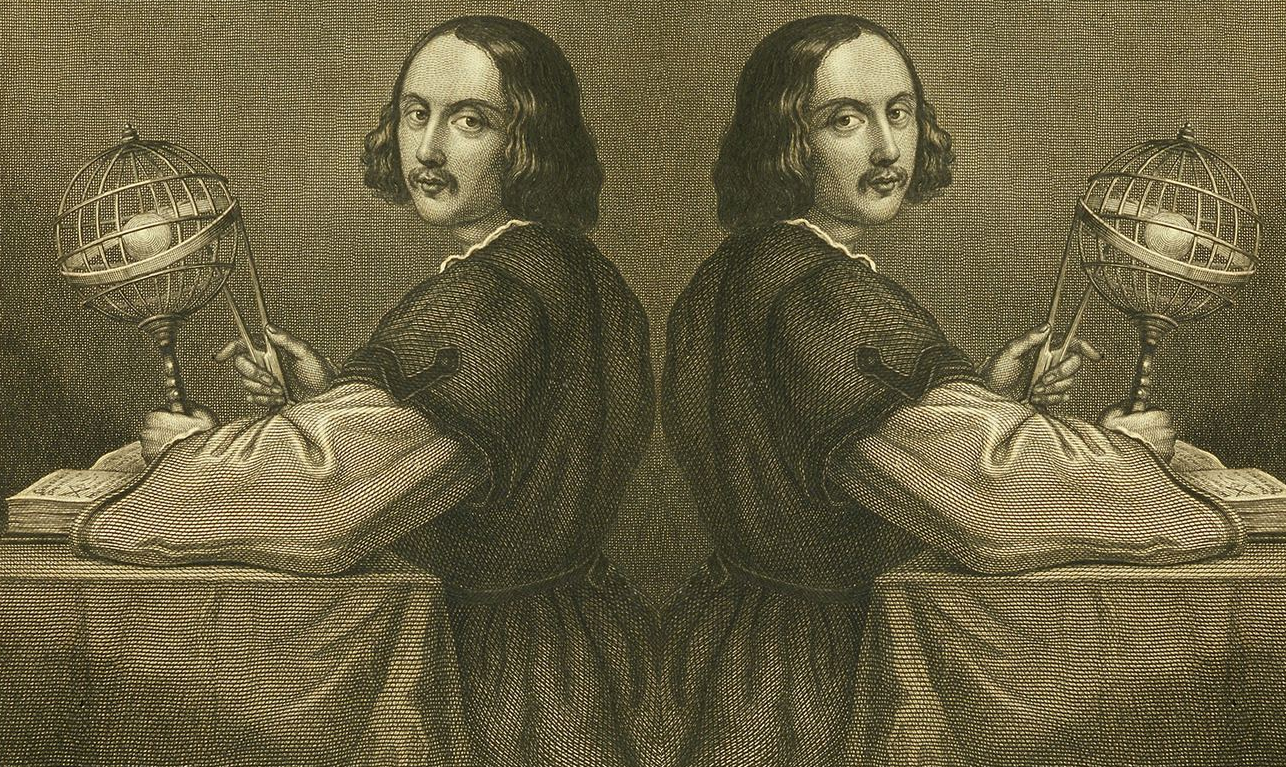
Domenico Maria da Novara, born in Ferrara in 1454 and deceased in Bologna in 1504, was an astronomer, university lecturer, and astrologer. He taught astronomy at the University of Bologna and was among the most influential figures in Italian astronomical and astrological culture between the fifteenth and early sixteenth centuries. Nicolaus Copernicus attended his lectures in Bologna and took part with him in several astronomical observations.
Among the most important documents for understanding his method are his Almanacs and annual prognostications. They reveal a form of mundane astrology founded not upon a single chart, but upon the ordered comparison of several figures: the ingress of the Sun into Aries, civil profections, syzygies, eclipses, great conjunctions, and the relationships among these configurations. Novara’s importance lies above all in his method. The annual judgment does not arise from an automatic formula, but from the ability to recognise which planets, celestial places, and astronomical phenomena acquire the greatest dominion in the figure of the heavens and in the political reality under examination.
THE INGRESSION OF THE SUN INTO ARIES
Domenico Maria da Novara gives particular importance to the ingress of the Sun into Aries, following a tradition that runs through medieval and Renaissance Arabic and Latin astrology. From this perspective, the Sun’s return to the beginning of the zodiac symbolically inaugurates the new annual cycle and provides a general figure from which to begin the interpretation of collective events.
The ingress chart is cast for the place representing the political or administrative centre of the territory under consideration. In the case of modern Italy, for example, it would be reasonable to use Rome, as the seat of the State’s principal institutions. The judgment therefore does not concern the city alone, but the territory and political community that find their representative centre there.
One of the first elements to be considered is the nature of the sign rising on the horizon at the moment of the ingress.
When the Ascendant falls in a cardinal or tropical sign, namely Aries, Cancer, Libra, or Capricorn, the year tends to be mobile, unstable, and subject to significant changes. General conditions may alter rapidly, even during the course of the different seasons.
When the Ascendant is in a double-bodied sign, namely Gemini, Virgo, Sagittarius, or Pisces, the year tends to divide into two main phases. The conditions of the first part of the year may differ markedly from those of the second, with a more evident change between the spring-summer and autumn-winter semesters.
Finally, when the Ascendant falls in a fixed sign, namely Taurus, Leo, Scorpio, or Aquarius, the conditions of the year tend to remain more constant. This does not imply the complete absence of events, but rather a greater continuity in general conditions, political structures, economic trends, or weather patterns.
After examining the rising sign, Novara seeks the planet that obtains the greatest dominion in the annual figure. This planet is considered one of the principal candidates for the role of Lord of the Year. Its nature, dignities, debilities, condition of motion, house position, relationships with the luminaries and other planets become decisive factors in describing the general character of the cycle.
A strong and well-disposed planet, placed in effective locations, may indicate that the qualities proper to its nature will manifest themselves more clearly. Conversely, a weak, impeded, retrograde, combust, or unfavourably placed planet may signify difficulties, obstacles, or the corruption of its natural qualities.
Novara also considers the relations of the planets with the Sun and Moon, the presence of significant fixed stars, and their placement within the local sphere. In some prognostications, he relates the annual ingress to the degree of the most recent great conjunction of Jupiter and Saturn, thus connecting the particular year to broader cycles of history and politics.
CIVIL PROFECTIONS AND THE LORD OF THE YEAR
In some Almanacs, Domenico Maria da Novara determines the Lord of the Year also through a profection based on the act of foundation of the city or political community under examination. The principle is clear: if a city possesses a reliable founding chart, its collective life may be observed through the annual movement of its Ascendant.
This procedure, however, requires great caution. It is possible only when there is a historically reliable date of foundation and, above all, when sufficient elements exist to establish a celestial figure with some documentary or traditional consistency. In the absence of such conditions, every founding chart risks remaining a purely hypothetical construction.
Applied today to Italy, this criterion could involve taking the chart of the proclamation of the Italian Republic and calculating its profected Ascendant for each ingress of the Sun into Aries. The planet ruling that Ascendant would then acquire an important role in describing the political and national year.
This planet, however, should not be considered in isolation. It is necessary to observe how it appears in the chart of the Sun’s ingress into Aries, in the founding figure, and in the profection chart itself. One must also assess the house in which the profected Ascendant falls within the annual ingress chart, as well as the relationships it establishes with the angles, the luminaries, and the dominant planets.
Novara’s method therefore suggests that judgment should not be reduced to a single Lord of the Year. The ruling planet of the civil profection and the dominant planet in the ingress chart may coincide, but they may also differ. In the latter case, both must be studied, since they describe different levels of the same reality: the cycle of the political community and the general quality of the year.
A historical example may be drawn from the ingress of the Sun into Aries in 2021, cast for Rome. The Ascendant was in a double-bodied sign and therefore indicated a year divisible into two principal phases rather than one with a uniform course from beginning to end. In the profection of the Italian Republic, the Ascendant fell in Aquarius, assigning Saturn an important role in the profected cycle. Yet, when considering the ingress chart alone, Mercury appeared to be among the strongest planets and among the most worthy candidates for the lordship of the year. A complete judgment would therefore have required a comparison between Mercury and Saturn, between the ingress figure, the civil profection, and the founding chart of the Republic.
THE SYZYGIES
Novara gives great importance to syzygies, namely the new and full moons preceding the ingress of the Sun into Aries, as well as those occurring during the year. These configurations are not interpreted separately, but are placed in relation to the principal figure of the annual ingress.
Attention is directed especially to the Moon: its condition, its applying and separating aspects, the planets with which it is configured, and the position of the luminaries in the angles of the chart. In this way, the new moon or full moon does not represent an autonomous prognostication, but rather a specification of what is already indicated by the annual revolution.
A particularly significant element is the relationship between the Ascendant of the syzygy and the chart of the Sun’s ingress into Aries. The zodiacal place rising at the new or full moon may fall upon the angles of the annual revolution, upon the houses of the luminaries, or upon the places occupied by the most important planets. From this relationship, Novara derives indications concerning the season or period of the year in which the general promises of the principal figure may manifest themselves more clearly.
ECLIPSES
Eclipses constitute another fundamental element of universal judgment. Domenico Maria da Novara considers solar and lunar eclipses as phenomena capable of producing lasting effects, especially when they involve degrees, planets, or important places in annual figures and in the charts of political communities.
In the interpretation of an eclipse, importance is given to the sector of the chart in which it occurs. When the phenomenon falls in the quadrant between the Ascendant and the Midheaven, Novara pays particular attention to the rising sign; when the eclipse occurs between the Midheaven and the West, greater importance is attributed to the culminating sign.
According to the traditional criterion, the duration of the eclipse also indicates the duration of its effects. For solar eclipses, the hours of obscuration are related to years; for lunar eclipses, the hours are related to months. The calculation indicates not only how long the influence may manifest itself, but also helps to establish when it will begin to produce perceptible effects.
Novara also notes that an eclipse does not necessarily act immediately after the phenomenon. The initial time of its manifestation is calculated from the hourly distance between the degree of the eclipse and the horizon or meridian. From this distance, one derives the number of months that must elapse before the effects of the eclipse begin to become visible.
SOCIAL CLASSES
One of the most interesting aspects of Novara’s method concerns the distinction between social classes and human activities according to the nature of the planets. The annual judgment is not directed towards an abstract and undifferentiated collective body, but towards the various categories that, according to the astrological grammar of the period, belong to the nature of Saturn, Jupiter, Mars, Venus, or Mercury.
Saturnine people may represent the elderly, labourers, farmers, marginalised persons, those engaged in difficult occupations, or those living in restricted conditions. Jovial people refer to magistrates, ecclesiastics, men of authority, honoured individuals, and circles connected with law or religion. Martial people include soldiers, surgeons, men of arms, blacksmiths, and those engaged in dangerous or conflictual occupations. Venusian people concern the arts, pleasures, women, trades associated with beauty, festivities, and relationships. Mercurial people refer instead to scribes, merchants, teachers, students, messengers, interpreters, technicians, and those devoted to intellectual or communicative activities.
The judgment therefore does not concern the individual zodiac sign of persons, but the social groups, professions, and activities attributed to the nature of the different planets. If Saturn rules the year and is afflicted, Novara may predict difficulties for Saturnine categories; if Venus is strong and well disposed, he may indicate a favourable period for the arts, agreements, trade, marriages, or Venusian activities.
GOVERNMENT AND PEOPLE
In judging public affairs, Domenico Maria da Novara adopts a distinction widely found in the Arabic and Latin tradition. The Sun and the ruler of the Midheaven refer to constituted power, magistracies, government, the sovereign, or institutions formally exercising authority.
The Moon, the Ascendant, and its ruler instead acquire greater importance in relation to the people, the social body, collective conditions, and the reactions of the community. The Moon, in particular, is examined through its speed, aspects, applications, and separations, since it represents that which changes, spreads, and manifests itself in common life.
To these elements may be added the rulers of the triplicities of the Ascendant and Midheaven, useful for clarifying the condition of institutions and people, the stability of their relationships, and the way in which events unfold during the course of the year.
CONCLUSION
The value of Domenico Maria da Novara’s method lies in the layered character of his observation. The astrologer does not limit himself to considering the ingress of the Sun into Aries, nor does he assign judgment to a single planet. He compares the annual figure, civil profections, syzygies, eclipses, great conjunctions, and the sensitive places of collective charts.
The result is a universal astrology understood as an art of connection: each celestial phenomenon must be evaluated in relation to other phenomena, to territory, institutions, and the different social conditions. This is perhaps the most important lesson that can still be drawn from reading his Almanacs: not to search for immediate formulas, but to construct judgment through an ordered comparison of figures, causes, and times.
Sources and Suggested Reading
Bonoli, F.; Bezza, G.; De Meis, S.; Colavita, C., eds., I pronostici di Domenico Maria da Novara, Leo S. Olschki.
Ptolemy, Tetrabiblos, translated by Giuseppe Bezza.
Bezza, Giuseppe; Fumagalli, Marco, Astrologia cattolica e catarchica.




Leave a Reply